| ? |
| Carcinoma Of Small Intestine |
|
? |
| ? |
| ? |
|
? |
| ? |
| ? |
Carcinoma Of Small Intestine :
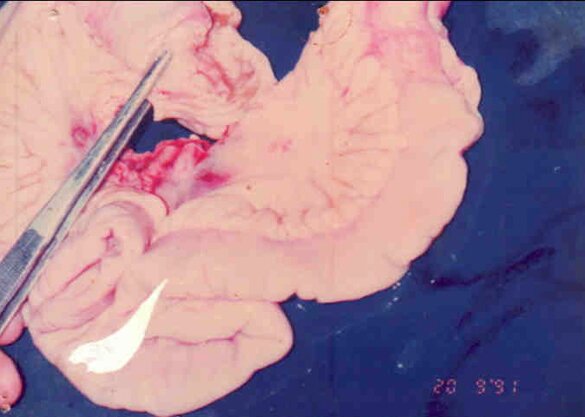
In oncology, small intestine cancer, also small bowel cancer and cancer of the small bowel, is a cancer of the small intestine. It is relatively rare compared to other gastrointestinal malignancies such as gastric cancer (stomach cancer) and colorectal cancer.Small intestine cancer can be subdivided into duodenal cancer (the first part of the small intestine) and cancer of the jejunum and ileum (the later two parts of the small intestine).Several different subtypes of small intestine cancer exist. These include:
* Adenocarcinoma
* Gastrointestinal stromal tumor
* Lymphoma
* Carcinoid (ileum)
Duodenal cancer is a cancer in the beginning section of the small intestine. It is relatively rare compared to gastric cancer and colorectal cancer. Its histology is usually adenocarcinoma. Familial adenomatous polyposis (FAP) is a risk factor for developing this cancer. The duodenum is the first part of the small intestine. It is located between the stomach and the jejunum. After foods combine with stomach acid, they descend into the duodenum where they mix with bile from the gall bladder and digestive juices from the pancreas. Duodenal cancer is difficult to remove surgically because of the area that it resides in, there are many blood vessels supplying the lower body. Chemotherapy is sometimes used to try and shrink the canceous mass. Other times intestinal bypass surgery is tried to reroute the stomach to intestine connection around the blockage. A 'Whipple' is a possible surgery that is tried sometimes with this cancer. The cancerous mass tends to block food from getting to the small intestine. If food can not get to the intestines, it will cause pain, acid reflux, and weight loss because the food can not get to where it is supposed to be processed and absorbed by the body. Patients with duodenal cancer may experience abdominal pain, weight loss, nausea, vomiting, and chronic GI bleeding.
|
| ? |
Risk Factors :
1) Crohn's disease.
2) Celiac disease.
3) Radiation exposure.
4) Male.
5) Hereditary GI cancer syndromes: familial adenomatous polyposis, hereditary nopolyposis colorectal cancer, Peutz-Jeghers syndrome.
|
|
? |
| ? |
| ? |
Back
|
? |
| ? |
|
| Our Profile |
|
| Dr. Rajendra R. Jadhav |
 |
|
M.B.B.S., M.S.
(General Surgeon) KEM HOSPITAL PUNE. |
|
 ? ?
|
|
 |
| ? |
| Dr. Madhuri R. Jadhav |
 |
|
| M.B.B.S., C.G.O. |
|
|
?
|
|
|
| ? |
| Dr. Sushant R. Jadhav |
 |
|
M.B.B.S. (Mumbai), D.N.B.
(Orthopedic Surgeon) DEEN DAYAL HOSPITAL, NEW DELHI. |
|
|
?
|
| ? |
|
| ? |
| ? |
| ? |
|