| ? |
|
? |
| ? |
| ? |
|
? |
| ? |
| ? |
Appendix :
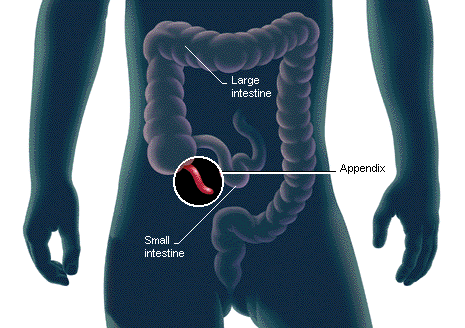
The appendix is a small, tube-like structure attached to the first part of the large intestine, also called the colon. The appendix is located in the lower right portion of the abdomen. It has no known function. Removal of the appendix appears to cause no change in digestive function.Appendicitis is an inflammation of the appendix. Once it starts, there is no effective medical therapy, so appendicitis is considered a medical emergency. When treated promptly, most patients recover without difficulty. If treatment is delayed, the appendix can burst, causing infection and even death. Appendicitis is the most common acute surgical emergency of the abdomen. Anyone can get appendicitis, but it occurs most often between the ages of 10 and 30.
|
| ? |
Causes :
The cause of appendicitis relates to blockage of the inside of the appendix, known as the lumen. The blockage leads to increased pressure, impaired blood flow, and inflammation. If the blockage is not treated, gangrene and rupture (breaking or tearing) of the appendix can result.Most commonly, feces blocks the inside of the appendix. Also, bacterial or viral infections in the digestive tract can lead to swelling of lymph nodes, which squeeze the appendix and cause obstruction. This swelling of lymph nodes is known as lymphoid hyperplasia. Traumatic injury to the abdomen may lead to appendicitis in a small number of people. Genetics may be a factor in others. For example, appendicitis that runs in families may result from a genetic variant that predisposes a person to obstruction of the appendiceal lumen.
|
| ? |
Symptoms :
1)Pain in the abdomen, first around the belly button, then moving to the lower right area.
2)Loss of appetite.
3)Nausea.
4)Vomiting.
5)Onstipation or diarrhea.
6)Inability to pass gas.
7)Low fever that begins after other symptoms.
8)Abdominal swelling.
|
| ? |
Treatment :
Acute appendicitis is treated by surgery to remove the appendix. The operation may be performed through a standard small incision in the right lower part of the abdomen, or it may be performed using a laparoscope, which requires three to four smaller incisions. If other conditions are suspected in addition to appendicitis, they may be identified using laparoscopy. In some patients, laparoscopy is preferable to open surgery because the incision is smaller, recovery time is quicker, and less pain medication is required. The appendix is almost always removed, even if it is found to be normal. With complete removal, any later episodes of pain will not be attributed to appendicitis.
|
|
? |
| ? |
| ? |
Back
|
? |
| ? |
|
| Our Profile |
|
| Dr. Rajendra R. Jadhav |
 |
|
M.B.B.S., M.S.
(General Surgeon) KEM HOSPITAL PUNE. |
|
 ? ?
|
|
 |
| ? |
| Dr. Madhuri R. Jadhav |
 |
|
| M.B.B.S., C.G.O. |
|
|
?
|
|
|
| ? |
| Dr. Sushant R. Jadhav |
 |
|
M.B.B.S. (Mumbai), D.N.B.
(Orthopedic Surgeon) DEEN DAYAL HOSPITAL, NEW DELHI. |
|
|
?
|
| ? |
|
| ? |
| ? |
| ? |
|